

TEACHING GUIDE 2
Peter, Peter Pumpkin Eater
Had a wife and could not keep her.
Put her in a pumpkin shell,
There he kept her very well!
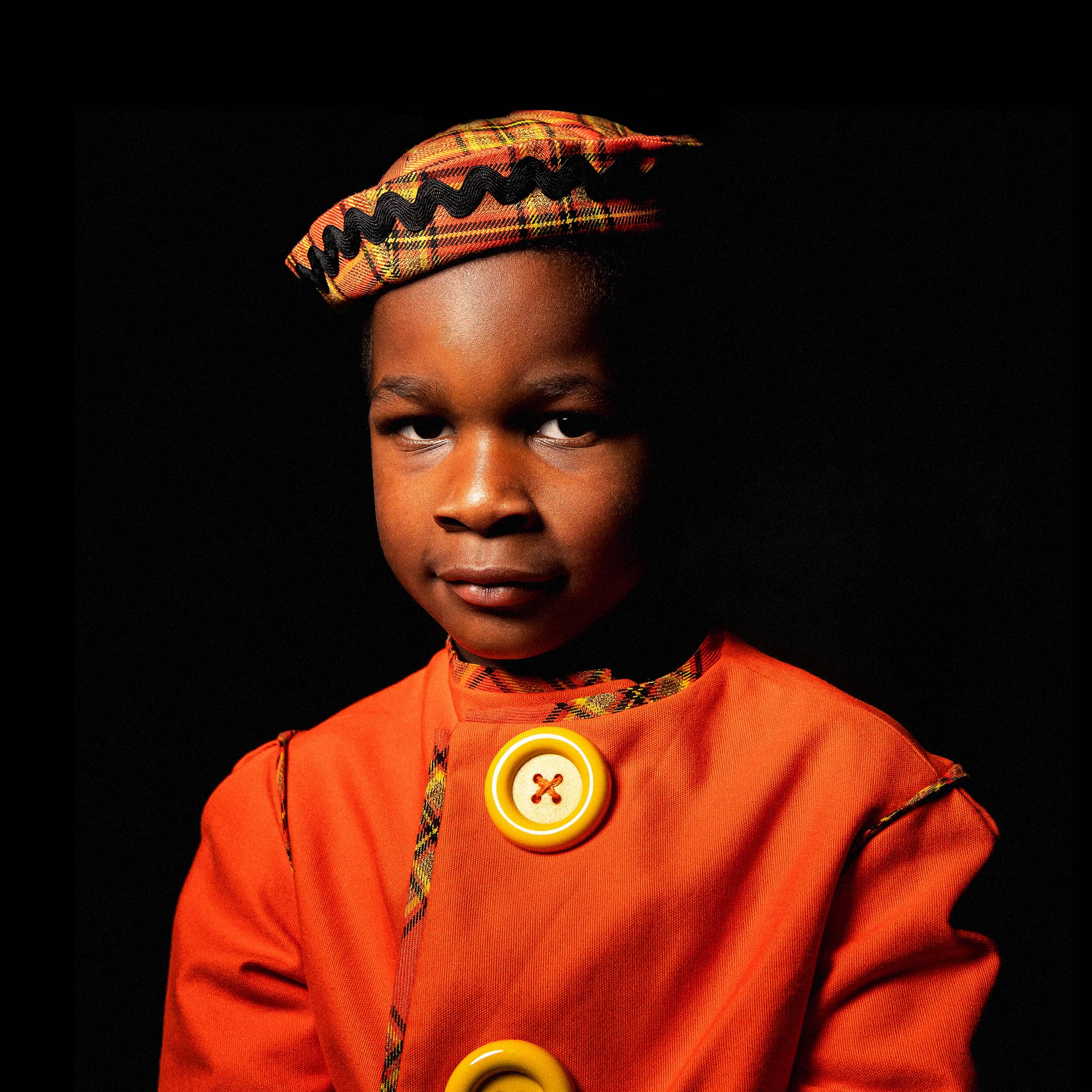
Photograph by Joe Mazza / Brave Lux
Peter Pumpkin Eater: Introduction
When Pumpkins Are Plentiful
We’ve placed “Peter Pumpkin Eater” in November when pumpkins are ripe and plentiful. Cut a pumpkin open and explore its inner world with your children. Invite them to explore it with all their senses. How does it feel? How does it smell? Notice the thickness of its shell. Ask them to describe the plentiful seeds found inside. Discuss how a pumpkin is really just a living container for growing and spreading seeds to make more pumpkins. Make pumpkin soup, pumpkin muffins, toast the seeds for a tasty snack!
Patches and Vines
Pumpkins grow on long thick vines in pumpkin patches. Ask your children if they have ever visited a pumpkin patch. What time of year was it? Have they ever tasted pumpkin pie? Both Halloween and Thanksgiving are holidays that take place in the autumn at harvest time. There could be a discussion of seasons and cycles of planting, tending to, and harvesting crops (“crop” could be a new vocabulary word).
Shells
This rhyme introduces the topic of shells. Many fruits, vegetables, and nuts grow inside shells (coconuts, walnuts, eggs, watermelon, peas). Some animals have shells (crabs, lobsters, oysters, turtles, beetles, snails). There are some intriguing questions to ask about shells. How can a shell be useful to a plant or animal? Does it protect them from the elements and predators? Let your children examine a variety of shells.
A Curious Dwelling
This family lives inside a pumpkin shell. That’s a curious dwelling! Have your children imagine being small enough to live inside a pumpkin shell. What would everyday life be like there? And can they name some other vegetables or fruits that would make unusual homes? What could be the names of the people who live there? For example: Edgar and Emily Ellsworth might live inside an eggplant.
Peter Pumpkin Eater
The rhyme “Peter Pumpkin Eater” presents a perfect opportunity to introduce letter recognition and alliteration. The percussive “P” in Peter’s name will make recognizing letter sounds easy. After they learn the beginning sounds of “Peter” and “pumpkin,” have them think of other Pumpkin Eater family names (Penny, Polly, Poppy, Patsy, Paul, Patrick, Penelope) or objects (piano, pajamas, puppy, piggy bank, pin cushion, pickles) in their home that begin with the letter “P.”
A Versatile Little Word
Peter keeps his wife “very well.” The versatile little word “well” is rich with meanings and usages in the English language. It helps modify many adjectives: well-worn, well-dressed, well-kept, well-matched, well-spoken, well-timed. It’s an intriguing word — it can describe how you’ve done something, the way you feel, or a deep hole in the earth filled with water! And it’s found in familiar phrases such as “it’s well worth the effort“ and “all’s well that ends well.”
The Color Orange
In the music video, all the costumes and the Pumpkin Eaters’ house are a brilliant orange. Ask your children if they can name other objects that are orange (the sun, tangerines, caution signs, daylilies, goldfish, yams, the inside of a cantaloupe, etc.).
Peter Pumpkin Eater: Discussion
Life in a Pumpkin
How big is a pumpkin? How small do you think the Pumpkin-Eaters must be to fit inside? Can you describe life inside a pumpkin shell? Would it be gooey, slimy, sticky, warm, cozy, etc.? Would you enjoy living inside a pumpkin shell in a pumpkin patch?
Shells
What other things have shells? Examples: walnuts, coconuts, eggs, peas, crabs, lobsters, oysters, turtles, beetles, snails, etc.
The Color Orange
What color is a pumpkin? Can you name other things that are orange?
Examples: the sun, tangerines, caution signs, day lilies, yams, goldfish, the inside of a cantaloupe, etc.
Vines and Patches
How do pumpkins grow? On long vines, with large leaves! Where do pumpkins grow? In a pumpkin patch! Have you visited a pumpkin patch? Have you ever harvested your own pumpkin?
A Very Busy Word
Peter keeps his wife “very well.” The little word “well” is a busy little word, it is an adjective, adverb, and a noun. We often see and hear the word “well” linked to other words (with a hyphen). Here are some examples: “well-being,” “well-built,” “well-worn,” “well-behaved,” “well-spoken,” “well-matched,” “well-known: “well-dressed.”
Well and Unwell
Speaking of ways to easily change the meanings of words, the prefix “un” transforms any word into its opposite such as: well – unwell.
Can we think of other words that start with “un”? Here are some examples: happy – unhappy, able – unable, button – unbutton, friendly – unfriendly, broken – unbroken, cover – uncover, fair – unfair, kind – unkind, tie – untie, safe – unsafe.
Well, Well, Well
The word “well” has several homonyms (two or more words that are spelled the same but have different meanings). Here are a few examples to share with your children:
You cleaned your room very well.
I am feeling well.
This cold water came from a very deep well.
It was well worth the effort.
Well, I was wondering.
Well, well, well, who do we have here?
Autumn Holidays
Which holidays do we celebrate with pumpkins (Halloween and Thanksgiving)? Have you ever carved a jack-o-lantern? Have you tasted pumpkin pie, pumpkin muffins, or pumpkin seeds?
Peter Pumpkin Eater: Language
KEY RHYMING WORDS
shell – well
RESPONSE RHYMING WORDS
bell – fell – jell – tell – well – yell
shell – sell – smell – swell – spell
VOCABULARY
“pumpkin patch”
“crop”
“dwelling”
“family tree”
Peter keeps his wife “very well.” The word well is extremely useful. There are many hyphenated words that link well to other words to enhance their meanings.
well-being
well-aware
well-built
well-worn
well-rounded
well-behaved
well-dressed
well-kept
well-matched
well-spoken
well-timed
well-known
IDIOMS
“well worth” (the time, effort, money)
“might as well”
“leave well enough alone”
“all’s well that ends well”
GRAMMAR: The Prefix “un”
Speaking of ways to easily change the meanings of words, the prefix “un” transforms any word into its opposite! Our first examples is: well – unwell.
Now, try it with other words:
happy – unhappy
able – unable
done – undone
button – unbutton
tangle – untangle
friendly – unfriendly
broken – unbroken
cover – uncover
fair – unfair
kind – unkind
screw – unscrew
tidy – untidy
tie – untie
safe – unsafe
GRAMMAR: Homonyms
The word “well” has several homonyms (two or more words that are spelled the same but have different meanings). Here are a few examples:
I am feeling well.
This cold water came from a very deep well.
You cleaned your room very well.
It was well worth the effort.
Well, I was wondering.
Well, well, well, who do we have here?
Peter Pumpkin Eater: Activities
OVERVIEW
In the following activities, children will play several imaginative word games using the letter “P.” They will plan a picnic for the Pumpkin Eaters and populate their family tree with Poppys, Pauls, and Pollys, and Patricks. They will create new characters with alliterative names such as: Debbie Donut Dipper, Malcolm Muffin Muncher. And with your guidance, they will write their own scripts about families who live in a watermelon, an eggplant, a coconut, a squash, and other curious food dwellings.
1. ACTIVITY: Debbie Donut Dipper
Try inventing new characters with an alliterated name similar to Peter Pumpkin Eater. Here are some fun tongue-twisting
Examples:
Debbie Donut Dipper, Nathan Nacho Nibbler, Tommy Taco Taster, Benita Burrito Eater, Charlie Chocolate Chomper, Oscar Okra-Eater, Cory Cookie Crumbler, Malcolm Muffin Muncher, Bobby Blueberry Biter, Sammy Sandwich Stuffer, Janet Jelly Jammer, Grady Grape Gobbler.
2. ACTIVITY: The Pumpkin Eater Family Tree
Names that begin with “P” are very particularly popular in the Pumpkin Eater family tree. Can you guess some of them?
Examples:
Penny, Paul, Polly, Poppy, Patrick, Pop, Patsy, Precious, Popper, Penelope, Priscilla, Prunella, Pamela, Peter Jr., Patsy, Patricia, Princess, etc.
3. ACTIVITY: The Pumpkin Eater’s Picnic
The Pumpkin Eaters are planning a picnic. What could they take from their pantry? Have your children name foods that begin with the letter “P.”
Examples:
popcorn, potatoes, pickles, pumpkin pie, prickly pears, pesto, pineapple upside-down cake, peaches, peas, porridge, pepper, plum pop-overs, pastries, paw paws, pomegranates, pancakes, plum pudding, etc.
Variant: What’s on the Shelf?
Have the children list some items that they might see in the Pumpkin Eaters’ house.
Examples:
a piano, pencils, paint, pajamas, a parrot, a puppet, plants, a puppy, a pail, a painting, pennies, pockets, a piggy bank, a pin cushion, a pine cone, a ping-pong table, a game of peek-a-boo, etc.
4. GAME: The Guessing Game
Now, you can play a fun game with all the “P” words you possess.
Teacher: describes an object that begins with “P.” Using the teacher’s clues, the children guess what it might be. Remember, there is no wrong answer as long as it starts with “P”.
Examples:
1. The Pumpkins Eaters are all excited because today they went to the pet store to buy a ____________ puppy, parrot, pony, piglet, penguin, etc.
2. When the Pumpkin Eaters go in their canoe, they need a ____________ paddle.
3. The doorbell just rang. It looks like someone sent Polly Pumpkin Eater a ____________ package.
4. Penelope Pumpkin Eater wants to draw a picture. She needs her colored ____________ pens and pencils.
5. Patrick Pumpkin Eater needs to wash the floor. He goes to the closet for a mop and ____________ pail.
6. Precious Pumpkin Eater loves to sleep with her head on a soft ____________ pillow.
7. Baby Polly Pumpkin Eater loves to play ____________ peek-a-boo.
5. ACTIVITY: Meet the Family
Materials:
white board or poster paper
Teacher: “Today we are going to invent other families like the Pumpkin Eaters. Then we will act them out, using our bodies and voices.”
Part One: Writing the Script
Seated in a circle.
Write a script for “Meet the Family” by imagining different food-themed families, using these prompts.
Meet the (type of fruit / vegetable) _______________ Eater family.
They live in a (type of fruit / vegetable from above) ___________________ .
They wear the color ___________________ .
This is how they walk (tip toes, stomping) ____________ .
This is how they dance ______________ .
This is how they say “hello” (high voice / low voice) ______________ .
This is how they snore (loud / soft) _________ .
Example:
Meet the Eggplant Eater family.
They live in an eggplant.
They wear the color purple.
They roll around everywhere they go.
They say “hello” with big round and booming voices as they tip their hats.
They snore loudly, with a rattling snort like this.
Part Two: Acting it Out
Materials
costume pieces made with whatever you have in the classroom
Teacher: “Now that we’ve written our script, let’s meet the families!”
Seated in stage and audience formation.
1. Children come to the stage in family groups and perform for the rest of the class.
Peter Pumpkin Eater: Music
THE MUSIC
How does this music make you feel?
Is this music slow or fast?
Does it change your mood?
What pictures does this music create in your mind?
Do you imagine a particular place, person, thing, color, animal, etc.?
How would you move to this music?
How would you move your hand in the air if you were conducting this song?
THE INSTRUMENTS
What musical instruments do you hear, can you name them?
How do you think the musical instruments make their sounds?
Are they blown through, plucked, strummed, bowed, tapped, hit, or struck?
What instrument families do these instruments belong to?
Are these instruments made of wood or metal?
Does this musical instrument play high or low pitches?
Bassoon
The Bassoon is a member of the woodwind family and uses a double reed to make sound. The player uses their air to vibrate two pieces of bamboo cane that are tied together.
Marimba
The marimba is a percussion instrument that has wooden bars the player strikes with a soft yarn mallet. Below each bar is a metal pipe that helps produce the sound. The marimba is similar to a xylophone but is larger and has a lower range.
GENRE: Classical
LESSON 1: Clapping Accents
In the song “Peter Pumpkin Eater,” there is a perfect place for children to insert clapping as they sing the repeating chorus (see below):
Very well, (clap, clap)
Very well, (clap, clap)
There he kept her very well. (clap, clap)
Very well, (clap, clap)
Very well, (clap, clap)
There he kept her very well. (no clap)
LESSON 2: The Bassoon
What is the instrument that the musician is playing at the beginning of the music video and while The Pumpkin Eaters are dancing? It’s a bassoon, the largest instrument in the woodwind family (along with clarinet, flute, oboe, recorder, piccolo, saxophone, English horn). The bassoon is four feet tall! The sound of the bassoon is made when a musician blows into the double reeds, made of bamboo. The pitch (high or low notes) is changed by pressing the metal “keys” along the instrument. The keys open and close the holes in various combinations to release the breath and make sound. Most bassoons are made of maplewood.
Peter Pumpkin Eater: Related Rhymes
“My Son John” begins with the alliterative phrase “diddle, diddle dumpling.”
My Son John
Diddle diddle dumpling, my son John
Went to bed with his trousers on,
One shoe off and one shoe on.
Diddle diddle dumpling, my son John.
“Owl in the Oak” has the alliterative lines: “wisky, wasky, weedle” and fiddle, faddle, feedle.”
Owl in the Oak
There was an owl who lived in an oak,
Wisky, wasky, weedle.
And every word he ever spoke
Was fiddle, faddle, feedle!
“I Had a Little Husband” is another rhyme about a spouse living in an unusual house!
I Had a Little Husband
I had a little husband no bigger than my thumb.
I put him in a pint pot, and there I bid him drum.
I bought a little handkerchief to wipe his little nose,
And a pair of little garters to tie his little hose.
“Once I Married My Wife” is another Mother Goose rhyme about marriage.
Once I Married My Wife
Once in my life I married a wife,
And where do you think I found her?
On Gretna Green, in velvet sheen,
With brambles all around her.
“Little Lad” is another rhyme that mentions pumpkins.
Little Lad, Little Lad
Little lad, little lad,
Where were you born?
Far off in Lancashire*, under a thorn,
Where they sip buttermilk
With a ram’s horn.
And a pumpkin scooped
With a yellow rim
Is the bonny bowl they breakfast in.
*Children can substitute “Lancashire” with the name of their town or city.
Peter Pumpkin Eater: Standards

Head Start Early Learning Outcomes Framework (ELOF)
Preschool Language and Literacy 7 | Child shows understanding of word categories and relationships among words. |
|---|---|
Preschool Approaches to Learning 13 | Child uses imagination in play and interactions with others. |
Preschool Scientific Inquiry 1 | Child observes and describes observable phenomena (objects, materials, organisms, and events). |
Preschool Scientific Inquiry 3 | Child compares and categorizes observable phenomena. |
Preschool Language and Literacy 5 | Child asks and answers questions about a book that was read aloud. |
Preschool Language and Literacy 6 | Child understands and uses a wide variety of words for a variety of purposes. |
The Head Start Early Learning Outcomes Framework: Ages Birth to Five (ELOF) presents five broad areas of early learning, referred to as central domains. The framework is designed to show the continuum of learning for infants, toddlers, and preschoolers. It is grounded in comprehensive research around what young children should know and be able to do during their early years.
The Head Start Program Performance Standards require grantees to implement program and teaching practices that are aligned with the ELOF. Education managers use the ELOF Implementation Toolkit to guide the alignment process and help their programs strengthen practices to promote children’s development in all ELOF domains.
The Cabinet of Wonder teaching guides are in alignment with Head Start’s ELOF. They have been designed to enhance any standard preschool curriculum by assisting teachers and families in both meeting school readiness goals and developing a joyful learning journey!