

TEACHING GUIDE 13
Rub-a-dub-dub, three men in a tub,
And who do you think they be?
The butcher, the baker,
the candlestick maker,
And all gone out to sea.
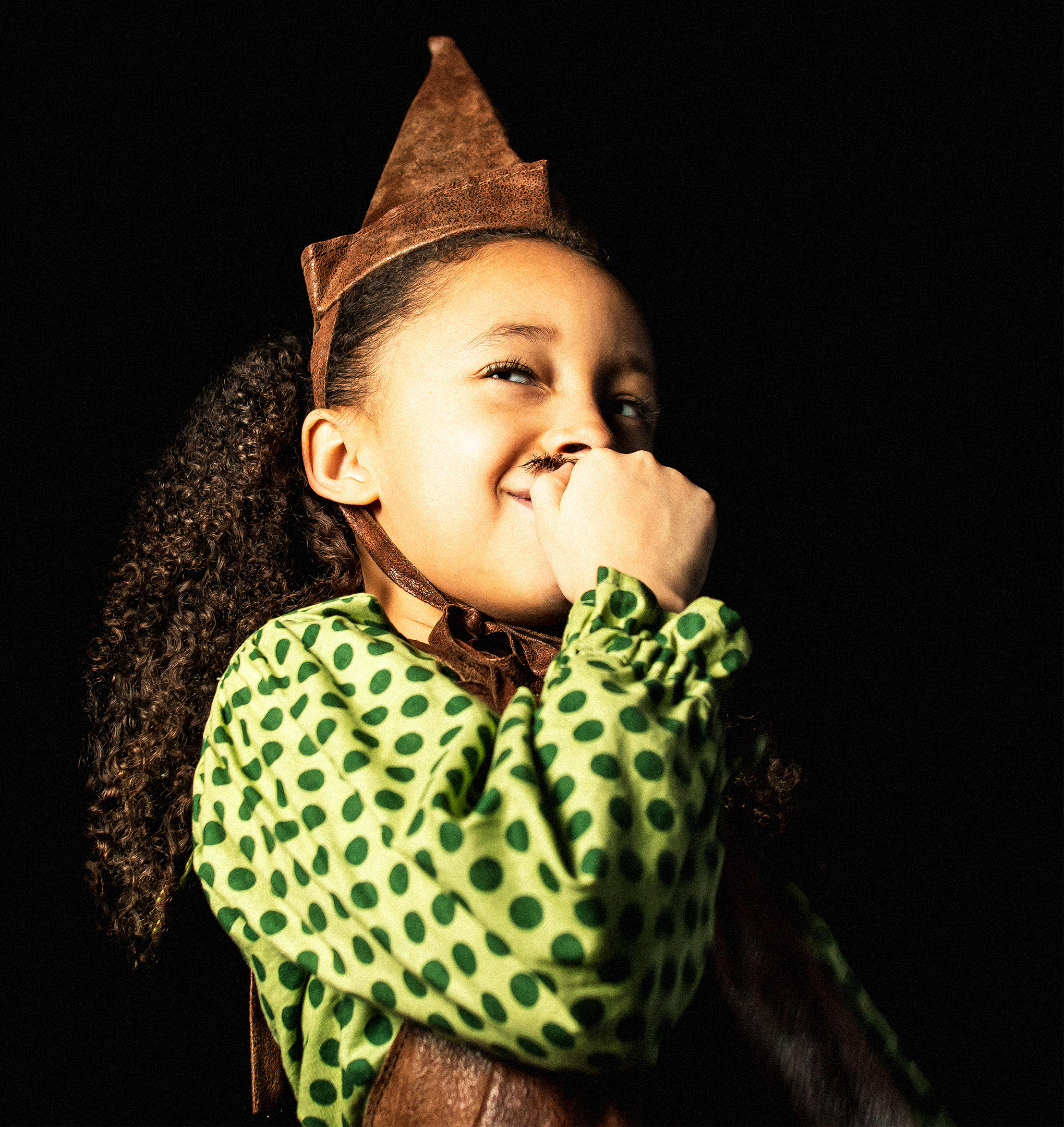
Photograph by Joe Mazza / Brave Lux
Rub-A-Dub-Dub: Introduction
Rub-A-Dub-Dub
“Rub-A-Dub-Dub” is a comic mystery with its three characters, the Butcher, the Baker, and the Candlestick Maker, all adrift together in a tub. Although this rhyme is completely absurd, it will provide a fun departure point for teaching your children about sea travel, the ocean, and the creatures that make it their home. This rhyme will certainly inspire their curiosity. Why are they in the tub? Where are they going? How long will they be gone? What will they take on their trip (“journey,” “voyage,” “adventure,”)? What will they see (whales, dolphins, seabirds, islands, mermaids, pirates)?
The Blue Planet
Let’s look deeper into the water our friends are floating in. Earth is a planet full of water, 71% of its surface is covered in it! That’s why it’s called The Blue Planet. Bodies of water exist in many sizes and we have named them all: puddles, ponds, lakes, creeks, streams, rivers, waterfalls, oceans, seas, etc. Most of your body is actually made of water! Some of our planet’s water is fresh, but most is saltwater. Children will see this fact demonstrated in the “Who is Mother Goose?” shadow play (a salt shaker sprinkles salt into the sea).
Water is ever changing from “liquid” to “vapor” to “solid” and back again. Clouds, fog, rain, hail, ice, and snow are all forms of water. Water is constantly rising and falling, condensing and evaporating. It is always finding its way from higher to lower elevations. Snow melts from tall mountain peaks to fill the rivers and lakes in valleys that lie below. Much of this water makes its way to the seas. Children can see this in miniature while playing in a sand table, or a playground sandbox.
Sea Travel and Sea Creatures
If we are talking about sea travel, there are many nautical terms to learn: sailor, ship, boat, submarine, seaweed, dock, launch, mast, deck, lifeboat, seasickness, waves, tides, sea level, and anchor. While we travel, we may visit islands, beaches, coasts, coves, harbors, capes, and bays. The sea is teeming with life, there are so many creatures to name: dolphins, whales, octopus, sharks, seagulls, jellyfish, squid, oysters, sponges, tuna, sea turtles, codfish, manta rays, porpoises, seahorses, coral, and more.
Don’t Miss the Boat!
There are some thought provoking figures of speech to teach your children about the sea: “don’t miss the boat,” “that ship has sailed,” “it’s all water under the bridge,” “there are plenty more fish in the sea,” “don’t make waves,” “it’s just a drop in the ocean,” and “the tide is turning.”
Trades and Tradespeople
Our three sailors in the tub are also “tradespeople.” In the music video, they are holding symbols of their “trades” — a link of sausages, a birthday cake, and a candlestick holder. In a small village like Rhyming Town, during Mother Goose’s time, there would have been many specialized tradespeople, for example: Farmer, Tailor, Shoemaker (Cobbler), Potter, Blacksmith, Carpenter, Clockmaker, Glassblower, Book Printer, Stonecarver, Shipbuilder, etc. Learning about these forms of work could spark rich discussions with your class. Many of the things that we use today that are machinemade were all made by hand in the past.
Bake, Baked, Baking, Baker
Children will be interested to know that adding a little suffix can make a big difference to the meaning of a word. “Rub-A-Dub-Dub” gives us the perfect example with “baker” from the root word “bake.” Demonstrate how adding “s,” “ed,” “ing,” or “ery” creates new words: bakes, baked, baking, and bakery. Look for other examples: make, makes, making, maker, and sing, sings, singing, singer.
It’s a Piece of Cake!
People have a long history of making metaphors with baking. Have fun introducing your children to them: “it’s a piece of cake,” “that takes the cake,” “it’s easy as pie,” “nutty as a fruitcake,” “he’s a tough cookie,” “that’s how the cookie crumbles.”
What Do We Find in a Bakery?
While on the subject of cake, ask your children if they have ever baked a cake or bought a cake from a bakery? What sorts of tasty treats would they find in a bakery (cakes, pies, muffins, bread, cupcakes, tarts, cookies, pastry)? What sorts of tools would a baker use (oven, mixing bowls, measuring cups, spoons, rolling pin, pans, cookie sheets, cookie cutters, spatulas, muffin tins, an apron)? What ingredients would you find (sugar, flour, honey, eggs, baking soda, chocolate, raisins, cinnamon, nuts, vanilla, cream, molasses, baking powder, yeast)?
Candle Making
Let’s not forget the Candlestickmaker and the tools of his trade. Long ago, candles were once made of animal tallow, beeswax, and plants dipped in fat. Many candles are still made of beeswax today. Bring a honeycomb and a beeswax taper to the classroom. Explain how candles are traditionally made by dipping the wick repeatedly in wax, allowing each layer to dry. Your children may remember Jack Be Nimble and how he jumped over a candlestick in another Cabinet of Wonder rhyme. If you haven’t tried sitting by candlelight and imagining the world in Mother Goose’s time, this could be the moment.
Rub-A-Dub-Dub: Discussion
Where Are They Going?
Where do you think our Butcher, Baker and Candlestick Maker are going? What are they taking with them? What will they see?
A tub is a strange vessel, but so is traveling by goose, jumping over the moon, or living in a pumpkin shell. Anything is possible in the Land of Imagination! Can you think of other unusual ways to travel?
The Blue Planet
Earth is the only planet in our solar system with abundant water. Water covers 71% of its surface. Let’s look at our globe to see where all the blue is! We could draw a picture of our planet and color the part that is covered in water blue.
There are lots of different names for bodies of water. Can we try to name some of them? (puddle, pond, lake, creek, stream, river, waterfall, ocean, sea)
The Cycle of Water
Have you ever thought about how magic water is? It’s always changing its shape. When you pour a glass of water to drink, it is “liquid.” And when we see steam coming out of a boiling kettle, that is water “vapor.” And if water becomes very cold, it will become “solid” and form ice, hail, or snow. Did you know that clouds floating in the sky and fog hovering over the ground are both made from millions of tiny water droplets?
Looking for Clues
Each one of the three sailors in the Rub-A-Dub-Dub tub is holding something in their hands that tells us what they do for their work. Can you look for the clues and tell me who is the Butcher? What is he holding? (a link of sausage). Who is the Baker? What is he holding? (a birthday cake) Who is the Candlestick Maker? What is he holding? (a candlestick holder).
Trades and Tradespeople
Do you think Mother Goose could go to the supermarket or the mall to shop? In a small village like Rhyming Town, everything the villagers needed was made by the people who lived there and sold in tiny shops.
People had important jobs to do called “trades” and they were known as “tradespeople.” There would have been a Cobbler sewing leather shoes, and a Potter shaping bowls and plates out of clay, and a Glassblower with a shop for making windows and cups.
Can we think of some of the special jobs people would need to do in a small village like Rhyming Town? Examples: Farmer, Tailor, Cobbler (Shoemaker), Blacksmith, Carpenter, Clockmaker, Book Printer, Stonecarver, Cabinetmaker, Shipbuilder.
What Do We Find in a Bakery?
Have you ever been to a bakery? What sorts of tasty things would you find in a bakery shop (cakes, pies, muffins, bread, cupcakes, cookies, pastry)? Have you ever baked at home? What sorts of tools did you use (oven, mixing bowls, measuring cups, spoons, rolling pin, pans, cookie sheets, cookie cutters, an apron, spatulas, muffin tins)? Did you follow a recipe? What did you mix together to make your baked treat (sugar, flour, honey, eggs, baking soda, chocolate, raisins, cinnamon, nuts, vanilla, cream, molasses, baking powder, yeast)?
Candle Making
Did you know that candles were once made of animal tallow, beeswax, and plants dipped in fat? People still make candles with beeswax today. They take a string (called a wick) and dip it over and over and over in the hot wax, cooling every layer until it’s thick enough to stand up as a candle.
Rub-A-Dub-Dub: Language
KEY RHYMING WORDS
rub – dub – tub
be – sea
RESPONSE RHYMES
scrub – stub – snub – nub – cub – club – pub
me – he – we – she – fee – glee – knee – tree
VOCABULARY
“journey”
“voyage”
“Adventure”
“liquid”
“vapor”
“Solid”
Sea and Sea Travel:
sailor, ship, sailboat, boat, vessel, submarine, anchor, dock, launch, paddle, drift, flow, erode, current, mast, rigging, deck, lifeboats, life vest, compass, sail, harbor, bay, cove, waves, tides, horizon, coast, shore, tide, tidal wave, tsunami (Japanese), seasickness, island, seaweed
Sea Creatures:
dolphins, whales, octopus, sharks, seagulls, jellyfish, squid, oysters, sponges, tuna, sea turtles, codfish, manta rays, porpoises, seahorses, coral, and more.
Trades and Tradespeople
“trade”
“tradespeople”
Farmer, Tailor, Shoemaker (A Cobbler), Potter, Glassblower, Blacksmith, Carpenter, Clockmaker, Wheelmaker, Book Printer, Stonecarver, Cabinetmaker, Shipbuilder
Candles:
wick, trimming the wick, snuffing out the candle, candlestick, wax, tallow, beeswax, taper, flame
Baking & Bakeries:
cakes, pies, muffins, bread, cupcakes, tarts, cookies, pastry
oven, mixing bowls, measuring cups, spoons, rolling pin, saucepans, cookie sheets, cookie cutters, pie pans, sugar, flour, yeast, baking soda, sugar, eggs, cream, spatulas, muffin tins
IDIOMS:
Sea Idioms:
“don’t miss the boat”
“that ship has sailed”
“it’s all water under the bridge”
“there are plenty more fish in the sea”
“don’t make waves”
“it’s just a drop in the ocean”
“the tide is turning”
Cake Idioms:
“it’s a piece of cake”
“that takes the cake”
“it’s easy as pie”
“he’s nutty as a fruitcake”
“she’s a tough cookie”
“that’s how the cookie crumbles”
GRAMMAR: Suffixes
There is an opportunity to explore suffixes beginning with “bake”:
bake+s = bakes
bake+ing= baking
bake+ed = baked
bake+er= baker
bake+ery= bakery
swim+s = swims
swim+ing = swimming
swim+er = swimmer
sing+s = sings
sing+ing = singing
sing+er = singer
make+s = makes
make+ing = making
make+er = maker
Rub-A-Dub-Dub: Activities
OVERVIEW
In the following activities and games, children will learn more about why Earth is called The Blue Planet. They will blow bubbles and play a traditional call and response ring game. They will pretend to swim from ship to shore and back again! While pretending to be traditional craftspeople in a village they’ll make symbols of their trades out of paper. And they will find different ways to count and move in waltz time.
1. ACTIVITY: The Blue Planet
Show children satellite images of Earth and let them see why we call this The Blue Planet. Make a paper pie graph and color 71% of it blue together with the children with paint or crayons, and 28% brown. Then cut out the sliver of Earth’s land to illustrate the water to land ratio.
2. ACTIVITY: Blowing Bubbles
In the “Rub-A-Dub-Dub” music video, there are bubbles around Mother Goose and the travelers in the tub. Blow bubbles with your children!
3. GAME: Charlie Over the Ocean!
Materials:
a seashell or another small object
Teacher: “We are going to play a game called ’Charlie Over the Ocean!’ This is a call and response game. It’s a bit like ‘Duck, Duck, Goose’ but we get to think of things we might find in the ocean.”
Seated in a circle.
1. Teacher: selects one child to be the Leader.
2. The Leader walks around the outside of the ring, guiding the call and response with the rest of the class.
Leader: “Charlie over the ocean!”
Class: “Charlie over the ocean!”
Leader: “Charlie over sea!”
Class: “Charlie over sea!”
Leader: “Charlie caught a ____________________!”
Class: “Charlie caught a ____________________!”
(The Leader inserts a sea-themed object such as a dolphin, whale, octopus, shark, seagulls, jellyfish, sea turtle, squid, oyster, sponge, tuna, codfish, manta ray, coral, seaweed, mermaid, pirate, seagull, porpoise, seahorse, etc.).
Leader: “But he can’t catch me!”
Class: “But he can’t catch me!”
3. The Leader drops the sea shell into the lap of a child in the ring and this child stands up and chases the Leader around the outside of the ring.
4. The Leader runs until he/she returns to the empty spot and they quickly sit down.
5. This child becomes the new Leader and the game begins again.
4. CRAFT & GAME: Ship to Shore
Materials:
picture of a ship
picture of the shore
Preparation:
Paint or draw a large picture of a ship and another of the shore. Tape them to the walls on opposite sides of the room.
Teacher: “Today, we’re going to play a game called ‘Ship to Shore.’ We’re going to pretend we are swimming in the ocean. I will be your captain and you are my crew. Listen closely and follow my directions! When I say shore you will swim toward the picture of the beach. When I say “ship” you swim toward the picture of the ship. If I say “octopus” you lie on your backs and wiggle all eight of your arms in the air! If I say “seagulls” you fly all around the room!
Children stand in the center of the room.
1. Teacher shouts one of these commands: “Ship!” “Shore!” “Octopus!” or “Seagulls!”
2. The children respond with one of the following actions:
Ship!: Children pretend to swim to the “ship.”
Shore!: Children pretend to swim to the “shore.”
Octopus!: Children lie on their backs, wiggling their arms and legs in the air.
Seagulls!: Children pretend to fly in all directions around the room.
3. Play the instrumental version of the “Rub-A-Dub-Dub” song during the game!
5. GAME: What Are You Doing?
Materials:
Secret Choice Board / Bag
Examples:
eating
sleeping
waking up
swimming
baking
fishing
dancing
kicking a ball
running a race
lighting a candle
Teacher: “We’re going to play a silent guessing game called ‘What Are You Doing?’ First, you will pick a secret activity from our choice board / bag and then act it out with your body and face. Everyone else will try to guess what you are doing.”
Children seated like an audience facing the stage.
1. One at a time (or in duos) children take turns selecting a secret activity.
2. They act it out silently for the audience.
3. The audience guesses what the actors are doing.
4. They take a bow and sit down.
5. Repeat with new actors until everyone has had a turn on stage.
6. CRAFT: We Are Makers
Materials:
paper, pencils, crayons, paints
scissors
glue, tape, stapler
Teacher: “In “Rub-A-Dub-Dub” there is a Butcher, a Baker, and a Candlestick Maker. All of these characters are called makers, tradespeople, or craftspeople. A Clockmaker makes clocks, a Baker makes bread, a Shoemaker makes shoes. Today we are going to think of different makers and draw pictures of the things that they would make.”
Children seated at tables.
1. The class works together to create a list of makers.
2. Each child selects the maker they are going to be.
2. All the children craft a symbol of the maker they are pretending to be.
3. Gather in a circle and ask each child to share what they’ve made.
4. Tape all the maker symbols on a board.
7. GAME: Row, Row, Row
Teacher: “We are going to play a game called ‘Row, Row, Row’ and use our imaginations to pretend we are riding in boats together.”
Preparation:
Teacher splits the class into trios and assigns roles to each person: Butcher, Baker, and Candlestick Maker.
Children in trios, sitting in imaginary boats on the floor.
1. Children practice counting to three and saying, “ONE, two, three,” emphasizing “ONE” by patting it on their laps.
2. Next, trios mime rowing their boats, putting their pretend oars in the water on the “ONE,” as the song plays.
VARIANT: Scrub-a-Dub-Dub
Materials:
Scarves
Teacher: “In this part of the game, pretend your scarf is your “washcloth” and you are going to Scrub-a-Dub-Dub your boat.”
1. The “rowboats” become bathtubs and the students “scrub the walls” in the “one, two, three” pattern they practiced before.
Rub-A-Dub-Dub: Music
THE MUSIC
How does this music make you feel?
Is this music slow or fast?
Does it change your mood?
What pictures does this music create in your mind?
Do you imagine a particular place, person, thing, color, animal, etc.?
How would you move to this music?
THE INSTRUMENTS
What instruments do you hear, can you name them?
How do you think the instruments make their sounds?
Are they blown through, plucked, strummed, bowed, tapped, hit, or struck?
Are these instruments made of wood or metal?
Trumpet
The trumpet is a brass instrument commonly used in classical and jazz ensembles. Sound is produced by vibrating the lips in a mouthpiece. The trumpet makes the highest sounds in the brass instrument family.
Trombone
The trombone is a brass instrument commonly used in classical and jazz ensembles. Sound is produced by vibrating the lips in a mouthpiece. The trombone typically does not have any buttons or valves and uses a slide to change pitches.
Tuba
The tuba is the largest and lowest pitched instrument in the brass family. To make a sound the player vibrates their lips into the mouthpiece like other brass instruments. The tuba typically has three valves to change the pitch.
Flute
The flute is a member of the woodwind family, even though it is typically made of metal. To make a sound on the instrument you blow air across an open hole, the air vibrates to create the sound. The flute is one of the oldest instruments with most cultures around the world having their own version of a flute.
GENRE: Waltz
The waltz is a style of music and a ballroom dance that are both characterized by having a pulse that is in 3 beats. Typically there is a bigger emphasis on the first beat, like a rise and fall, with each set of 3 beats.
MUSIC LESSON 1: Waltz Time
Children can learn to count in ¾ time. Remember to accent the first beat (1, 2, 3).
MUSIC LESSON 2: Kettledrums
Timpani are members of the percussion family, they are also called “kettledrums.” These large bowl-shaped drums are typically made of copper and sit in a stand (like a big cupholder). They have a large piece of leather or fiberglass stretched over the rim, called a “drum head” which is held in place by a ring. The player changes the pitch by pressing a foot pedal that tightens or loosens the ring. Sound is made by hitting the timpani with special mallets made with felt or leather heads. Timpani can sound like the rumble of thunder! When the star falls on the forehead of the Moon in the shadow play “Who is Mother Goose?” the sound you hear is the timpani.
Rub-A-Dub-Dub: Related Rhymes
“Milkman, Milkman” talks about a strange trip in a channel of buttermilk.
Milkman, Milkman
Milkman, Milkman, where have you been?
“In Buttermilk Channel up to my chin,
I spilt my milk, and I spoilt my clothes,
And got a long icicle hung to my nose.”
“Bobby Shaftoe” is another Mother Goose character bound for an ocean voyage.
Bobby Shaftoe
Bobby Shaftoe’s gone to sea,
Silver buckles on his knee.
He’ll come back and marry me,
Pretty Bobby Shaftoe.
Bobby Shaftoe’s fat and fair,
Combing down his yellow hair.
He’s my love forevermore,
Pretty Bobby Shaftoe.
“A Sailor Went to Sea” is a fun hand-clapping game:
A Sailor Went to Sea
A sailor went to sea, sea, sea,
To see what she could see, see, see.
But all that he could see, see, see,
Was the bottom of the deep blue sea, sea, sea.
The following three rhymes and songs all involve bakers and pastry:
Pat a Cake
Pat-a-cake, pat-a-cake, baker’s man,
Bake me a cake, as fast as you can.
Pat it, prick it, and mark it with B,
Put it in the oven for baby and me.
The Muffin Man
Do you know the Muffin Man,
The Muffin Man, the Muffin Man?
Do you know the Muffin Man
Who lives in Drury Lane?
Another fun contemporary bakery-themed chant is “Ten Little Muffins.”
Ten Little Muffins
Ten little muffins in the bakery shop,
You know, the kind with the honey and the sugar on top?
Along came ________________ (insert name) with a penny to pay,
She took that muffin and she walked away.
Rub-A-Dub-Dub: Standards

Head Start Early Learning Outcomes Framework (ELOF)
Preschool Scientific Inquiry 2 | Child engages in scientific talk. |
Preschool Language and Literacy 7 | Child shows understanding of word categories and relationships among words. |
Preschool Approaches to Learning 11 | Child shows interest in and curiosity about the world around them. |
Preschool Language and Literacy 5 | Child asks and answers questions about a book that was read aloud. |
The Head Start Early Learning Outcomes Framework: Ages Birth to Five (ELOF) presents five broad areas of early learning, referred to as central domains. The framework is designed to show the continuum of learning for infants, toddlers, and preschoolers. It is grounded in comprehensive research around what young children should know and be able to do during their early years.
The Head Start Program Performance Standards require grantees to implement program and teaching practices that are aligned with the ELOF. Education managers use the ELOF Implementation Toolkit to guide the alignment process and help their programs strengthen practices to promote children’s development in all ELOF domains.
The Cabinet of Wonder teaching guides are in alignment with Head Start’s ELOF. They have been designed to enhance any standard preschool curriculum by assisting teachers and families in both meeting school readiness goals and developing a joyful learning journey!