

TEACHING GUIDE 3
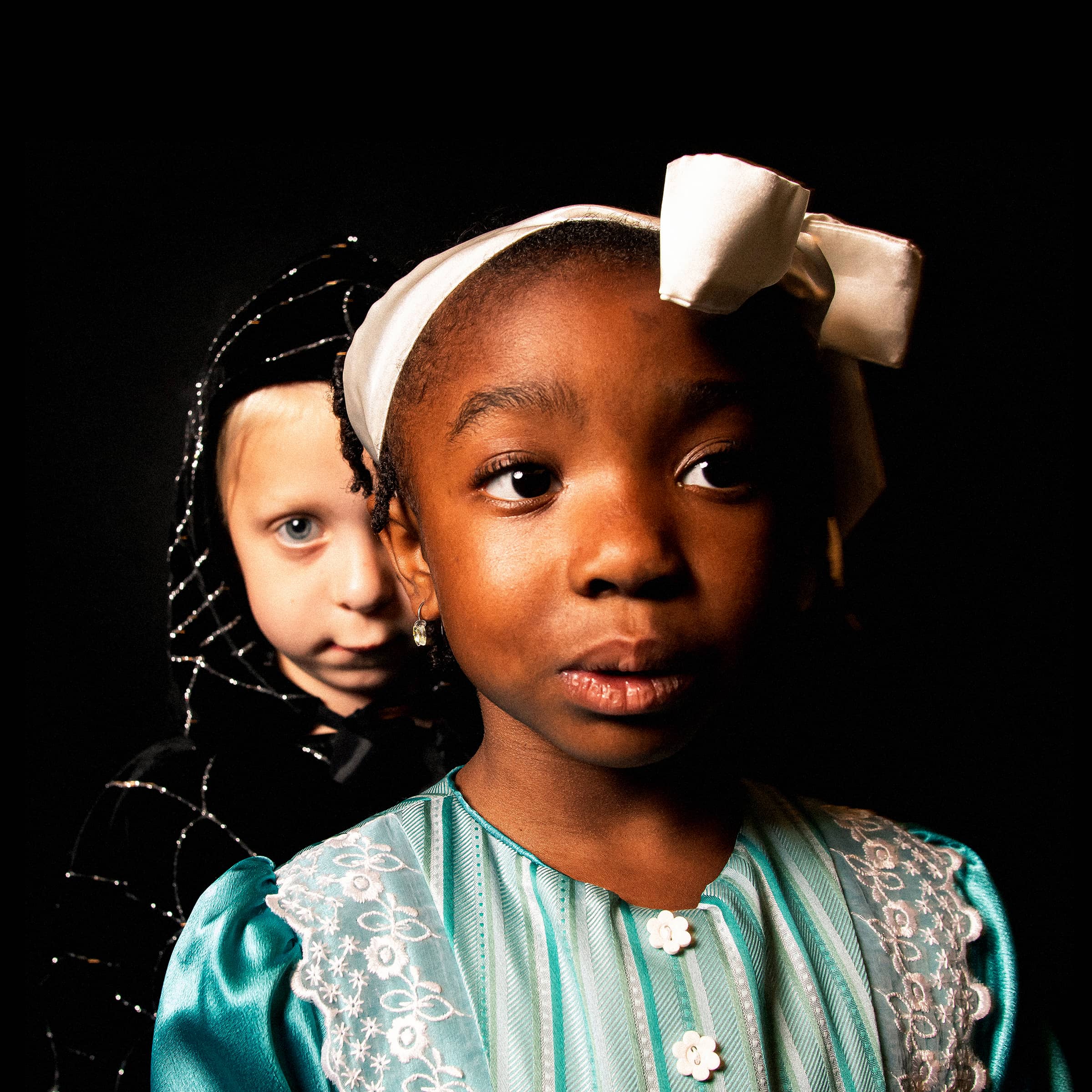
Little Miss Muffet sat on a tuffet,
Eating her curds and whey.
Along came a spider
Who sat down beside her
And frightened Miss Muffet away!
Photograph by Joe Mazza / Brave Lux
Little Miss Muffet: Introduction
Little Miss Muffet
Little Miss Muffet is one of the most recognizable Mother Goose characters. Her simple story of being startled by a spider will captivate even the youngest child. Children can easily identify with Miss Muffet, since spiders can be a bit scary. Very few spiders are actually dangerous. In fact, most are harmless, but a conversation about being surprised
or startled make sense for this rhyme.
Goosebumps and Heebie-Jeebies
We all respond to fear in different ways; sometimes we are frozen in place, run away, or cry out. There are many new words that can be used to describe fear: shocked, stunned, scared, spooked, alarmed, frightened, afraid, astonished, nervous, panicked, petrified, spooked, jumpy, jittery. Some fun expressions to describe fear might be heebie-jeebies, shaking like a leaf, to have goosebumps, or be scared out of your wits! Children can take turns telling the class about things that scare them or how it feels to be frightened.
Spiders
Some spider facts: spiders are not insects, they are actually arachnids (along with scorpions and ticks). There are 40,000 different species of spiders! They have eight legs and up to eight eyes. All spiders can spin silk but not all spiders weave webs. Some spin sacs to hold their eggs. Baby spiders are called “spiderlings.”
While making a study of spiders, children could draw or cut them out of paper, arranging four legs on each side of their bodies. Attach strings to suspend them like puppets.
What is a Tuffet?
Most people are surprised to discover that “tuffet” is not a nonsense word invented to rhyme with “Muffet”. A tuffet is either a low footstool or a clump of dirt and grass.
Pantomime
Children will love to act out the story of The Spider and Miss Muffet. Very few props will be needed, just a small stool, a dish, a spoon, and a toy spider. You could also add some simple costume pieces: a bonnet, an apron, a cape. Every child can take a turn being The Spider and Miss Muffet while the rest of the class recites or sings the rhyme.
Curds and Whey
The term “curds and whey” will be new to your children. When milk sours, or curdles, it separates into two parts: the solid (curds) and the liquid (whey). Cheese is essentially curdled milk. Cheeses can be derived from both animals and plants. Typical animal cheeses are: cow, sheep, goat, and buffalo. Plant milk cheeses can be made from almond, soy, oat, cashew, coconut, rice, cauliflower, pumpkin, and more. Have a cheese tasting party, and separate the cheeses into different categories by source. Amaze your children with the variety of texture, color and flavor of cheeses.
Black And Blue
The Spider’s cape and hood are both black. Some other things that are black: night, ink, pepper, tea, ants, crows, black berries, olives, beetles, bears, coal, panthers, pencil lead. Miss Muffet’s fantastic costume is blue. Ask your children to think of other objects that are blue. Examples: the sky, the ocean, robin’s eggs, blueberries, blue jays, some people’s eyes, Earth (it’s sometimes called “The Blue Planet”).
A Lovely Preposition
“Beside” is a lovely preposition that may not be in your children’s vocabulary yet. You can practice phrases that make use of this preposition. For example: “Please come sit beside me,” or “Please place the spoon beside the plate.” Explore other prepositions that describe place, position, or proximity: above, below, under, underneath, above, over, in, out, between, across, inside, outside, behind, before, after, etc.
Little Miss Muffet: Discussion
All Things Archinid
Spiders are not actually insects, they are arachnids (along with ticks, scorpions, and mites). There are 40,000 different species of spiders! All spiders have eight legs. Spiders can have from two to eight eyes. All spiders can spin silk (with spinnerets located on their tummies) but not all spiders weave webs. Some spin sacs to hold their eggs until they mature. Baby spiders are called “spiderlings.” Very few spiders are dangerous, most are harmless.
Shaking Like a Leaf
Are you frightened by spiders, or anything else? What do you do when you are afraid? Do you freeze-up, run away, cry out, catch your breath? It may sound strange but some people laugh when they are scared!
Can you think of ways to describe being afraid? How about: shocked, stunned, scared, spooked, alarmed, frightened, afraid, astonished, nervous, panicked, petrified, spooked, jumpy, jittery, heebie-jeebies, shaking like a leaf, goosebumps, scared out of your wits!
Webs
Have you ever watched a spider spin a web? Have you ever touched a web? Look for the spider webs printed on the musician’s bow-ties.
The Color Black
The Spider’s cape and cap are both black (with a silver web design). Some other things that are black: night, ink, pepper, tea, ants, crows, black berries, olives, beetles, bears, coal, panthers, pencil lead. Do you see anything else in this room that is black?
The Color Blue
Miss Muffet’s fantastic costume is blue. Can you think of any other objects that are blue? Examples: the sky, the ocean, robin’s eggs, blueberries, blue jays, some people’s eyes, Earth from outer space is called “The Blue Planet”). Can you point to anything in our room that is also blue?
Pantomime
Who wants to do a pantomime? Who wants to be The Spider and who wants to be Miss Muffet?
Curds and Whey
Miss Muffet is eating curds and whey. Do you know what curds and whey are? Did you know cheese can be made from cow, sheep, goat or buffalo milk? But did you know that cheese can be made from nuts, beans or vegetables too?
Beside or Behind?
The Spider comes to sit beside Miss Muffet. What if The Spider sat behind or in front of or on Miss Muffet. What would that look like? What would that new word do to our rhyme?
Little Miss Muffet: Language
KEY RHYMING WORDS
Muffet – tuffet
spider – beside her
RESPONSE RHYMING WORDS
buffet – stuff it – rough it
tighter – fighter – lighter – biter
VOCABULARY
“archnid”
“spiderlings”
“tuffet”
“curds”
“whey”
“beside”
IDIOMS
“it gave me goosebumps”
“I was shaking like a leaf”
“scared out of my wits”
SYNONYMS
frightened, astonished, shocked, stunned, scared, spooked, alarmed, frightened, ruffled, disturbed, afraid, nervous, panicky, petrified, spooked, jumpy, jittery
PREPOSITIONS
“Beside” is a lovely preposition that may not be in your children’s vocabulary yet.
Practice phrases that use it.
“Come sit beside me.”
“The cat is sleeping beside the fireplace.”
“Please place the spoon beside the plate.”
Explore other prepositions that describe place, position, or proximity:
below
under
underneath
above
over
in
out
between
across
inside
outside
behind
before
after
Humpty Dumpty: Activities
OVERVIEW
In the following activities children will build their own theater, sets, and costumes, and perform the Miss Muffet story in pantomime. They will explore musical contrasts (high-low, loud-soft). They will draw spiders and make string webs. When you have a cheese tasting party, they will learn how cheese is made and how many delicious varieties there are! And don’t forget about Miss Muffet’s classic cousin rhyme and finger play, “The Itsy Bitsy Spider.”
1. ACTIVITY: Spider Drawings
Make paper spiders, arranging four legs on either side of their bodies, attach strings to suspend them like puppets. Draw spiderwebs or even make them out of bits of string.
2. ACTIVITY: Miss Muffet Pantomime
Children will love to act out the story of The Spider and Miss Muffet. Very few props will be needed, just a small stool, a dish, a spoon, and a toy spider. You could also add some simple costume pieces: a bonnet, an apron, a cape. Every child can take a turn being The Spider and Miss Muffet while the rest of the class recites or sings the rhyme.
3. CRAFT: Let’s Make a Theatre!
Materials:
an area marked as the stage (an area carpet or colorful tape on the floor)
a tuffet (any small stool or cube)
costume pieces for Miss Muffet (a bonnet, a collar, an apron)
costume piece for The Spider (a cape, a hood)
a bowl and spoon
Setting the Stage
Teacher: “Let’s make a theater in our classroom. We’ll be the actors and musicians. We’ll use our imaginations, bodies, voices, and instruments to tell a story. When we step on stage we are in the story. When the play ends we become ourselves again.”
Miss Muffet Pantomime
1. Teacher shows where the stage will be and where the audience will sit.
2. Place the tuffet on stage.
3. Teacher selects two actors to play The Spider and Miss Muffet.
4. Teacher announces, “The End” and cues the audience to clap, actors take a bow.
5. Repeat with a new pair of actors.
4. ACTIVITY: The Itsy-Bitsy Spider
You may already have plans to teach the classic children’s rhyme “The Itsy-Bitsy Spider,” but this little traditional rhyme, with hand movements, will partner well with Miss Muffet and her Spider.
The Itsy-Bitsy Spider
The itsy-bitsy spider
climbed up the waterspout.
Down came the rain
And washed the spider out.
Out came the sun
And dried up all the rain
And the itsy-bitsy spider
climbed up the spout again.
5. ACTIVITY: Cheese Making
Here is a very simple recipe for making a fresh cow’s milk cheese from India called “paneer.”
Ingredients & Tools:
milk (1 gallon)
salt (½ teaspoon)
lemon juice (½ cup)
large saucepan
a sieve
cheese cloth
Spoon
Bowl
Plate
refrigerator
(yields 2 pounds of cheese)
1. Bring milk to just below boiling point.
2. Add lemon juice and stir for one minute and watch as curds form.
3. Line a sieve with cheesecloth.
4. Pour the whey and curds into the sieve to separate them. The paneer will still be quite soft and watery.
5. Bundle up the paneer so it’s wrapped in the cheesecloth, rinse with water to remove the excess lemon flavor. The paneer will still seem watery and wobbly. Squeeze out what liquid you can. If paneer starts coming through the cheesecloth, you’re squeezing too hard.
6. Place the paneer in the cheesecloth and return it to the strainer. Use a small bowl to shape it.
7. Place a small plate on top of the paneer and weigh the plate down to help drain off liquid.
8. Leave in the fridge for 4 hours and your paneer will be ready to taste!
6. ACTIVITY: A Cheese Tasting Party
Have a cheese tasting party! Separate the cheeses into different categories by their sources. Label each cheese with a drawing, photograph, or little sign that identifies the type. This could be a chance to talk about foodways of different countries. Children will be amazed by the variety of texture, color, and flavor of cheeses traditionally made all over the world.
Create a chart for rating the popularity of the cheeses! Don’t forget to include ricotta (sweetened with a touch of honey) or cottage cheese, because it’s nearest to what’s in Miss Muffet’s bowl.
Little Miss Muffet: Music
THE MUSIC
How does this music make you feel?
Is this music slow or fast?
Does it change your mood?
What pictures does this music create in your mind?
Do you imagine a particular place, person, thing, color, animal, etc.?
How would you move to this music?
How would you move your hand in the air if you were conducting this song?
THE INSTRUMENTS
What musical instruments do you hear, can you name them?
How do you think the musical instruments make their sounds?
Are they blown through, plucked, strummed, bowed, tapped, hit, or struck?
What instrument families do these instruments belong to?
Are these instruments made of wood or metal?
Does this musical instrument play high or low pitches?
Bass Clarinet
The bass clarinet is a member of the woodwind family and most closely related to the soprano clarinet. This instrument produces sound by having a single reed vibrate against the mouthpiece when the player blows air into it. The bass clarinet is longer and larger than the soprano and its mouthpiece is mounted on a metal tube. Due to its size, the bass clarinet can play lower pitches.
Trumpet
The trumpet is a brass instrument commonly used in classical and jazz ensembles. Sound is produced by vibrating the lips in a mouthpiece. The trumpet makes the highest sounds in the brass instrument family.
Trombone
The trombone is a brass instrument commonly used in classical and jazz ensembles. Sound is produced by vibrating the lips in a mouthpiece. The trombone typically does not have any buttons or valves and uses a slide to change pitches.
Tuba
The tuba is the largest and lowest pitched instrument in the brass family. To make a sound the player vibrates their lips into the mouthpiece like. The tuba typically has three valves to change the pitch.
GENRE: Jazz
LESSON 1: What is Jazz?
The musical style of “Little Miss Muffet” is called Jazz. Jazz as a musical genre originated in New Orleans in the late 1800’s and traveled up the Mississippi River to Memphis, St. Louis, and even to Chicago. Jazz music is characterized by a swing feeling, improvisation, and blues chords.
LESSON 2: The Brass Family
In the music video, children will see Miss Muffet scaring the musicians with her toy spider. This offers a good chance to see all the brass instruments up close. Point out the brass family for your children: trumpet, trombone, and tuba. They are all made of bent tubes of metal and make their sound when lips vibrate against their mouthpieces and air is blown through them. They all have ”bells” formed at the place where the air exists. Make a study of how the instruments are different in size and pitch range, and which ones have valves or slides.
LESSON 3: The Bass Clarinet
The bass clarinet can be seen in the “Little Miss Muffet” music video. Unlike the members of the brass family, the clarinet is made of wood. Clarinets are usually made of African blackwood and have and have a flared metal bell. The mouthpiece, usually of ebonite (a hard rubber), has a slot-like opening in one side, over which a single reed, made from natural cane, is secured by a screw clip. The player grips the mouthpiece, reed down, between his lips or lower lip and upper teeth. The bass clarinet makes a deep rich tone.
Calypso is a vibrant style of Caribbean music that originated in Trinidad and Tobago. Calypso music features percussion focused tricky rhythms with heavy syncopation.
Little Miss Muffet: Related Rhymes
“The Itsy-Bitsy Spider” is another classic spider themed rhyme!
The Itsy-Bitsy Spider
The itsy-bitsy spider
climbed up the waterspout.
Down came the rain
And washed the spider out.
Out came the sun
And dried up all the rain
And the itsy-bitsy spider
climbed up the spout again.
“Calico Pie” (by Edward Lear), although this poem is not a Mother Goose rhyme, it’s about little creatures flying and running away.
Calico Pie
Calico Pie,
The little Birds fly
Down to the calico tree,
Their wings were blue,
And they sang “Tilly-loo!”
Till away they flew,
And they never came back to me!
They never came back!
They never came back!
They never came back to me!
Calico Jam,
The little Fish swam
Over the syllabub sea,
He took off his hat
To the Sole and the Sprat,
And the Willeby-wat,
But he never came back to me!
He never came back!
He never came back!
He never came back to me!
Calico Ban,
The little Mice ran,
To be ready in time for tea,
Flippity-flup,
They drank it all up,
And danced in the cup,
But they never came back!
They never came back!
They never came back!
They never came back to me!
Calico Drum,
The Grasshoppers come,
The Butterfly, Beetle, and Bee,
Over the ground,
Around and around,
With a hop and a bound –
But they never came back!
They never came back!
They never came back!
They never came back to me!
Little Miss Muffet: Standards

Head Start Early Learning Outcomes Framework (ELOF)
Preschool Scientific Inquiry 1 | Child observes and describes observable phenomena (objects, materials, organisms, and events). |
Preschool Social and Emotional Development 6 | Child expresses a broad range of emotions and recognizes these emotions in self and others. |
Preschool Approaches to Learning 13 | Child uses imagination in play and interactions with others. |
Preschool Scientific Inquiry 3 | Child compares and categorizes observable phenomena. |
Preschool Mathematics Development 10 | Child explores the positions of objects in space. |
Preschool Language and Literacy 6 | Child understands and uses a wide variety of words for a variety of purposes. |
Preschool Perceptual, Motor, and Physical Development 3 | Preschoolers exhibit complex fine motor coordination when using tools to complete tasks. |
The Head Start Early Learning Outcomes Framework: Ages Birth to Five (ELOF) presents five broad areas of early learning, referred to as central domains. The framework is designed to show the continuum of learning for infants, toddlers, and preschoolers. It is grounded in comprehensive research around what young children should know and be able to do during their early years.
The Head Start Program Performance Standards require grantees to implement program and teaching practices that are aligned with the ELOF. Education managers use the ELOF Implementation Toolkit to guide the alignment process and help their programs strengthen practices to promote children’s development in all ELOF domains.
The Cabinet of Wonder teaching guides are in alignment with Head Start’s ELOF. They have been designed to enhance any standard preschool curriculum by assisting teachers and families in both meeting school readiness goals and developing a joyful learning journey!