


“During the years that I was developing the nursery rhyme program for my local Head Start preschoolers (which eventually birthed Cabinet of Wonder) I was asked time and time again, ‘Why Mother Goose?’ My simple answer was, ‘Because I love her and so do the children.’ But after much pondering and research, I realize I have a deeper reason.”
– Natalie Merchant
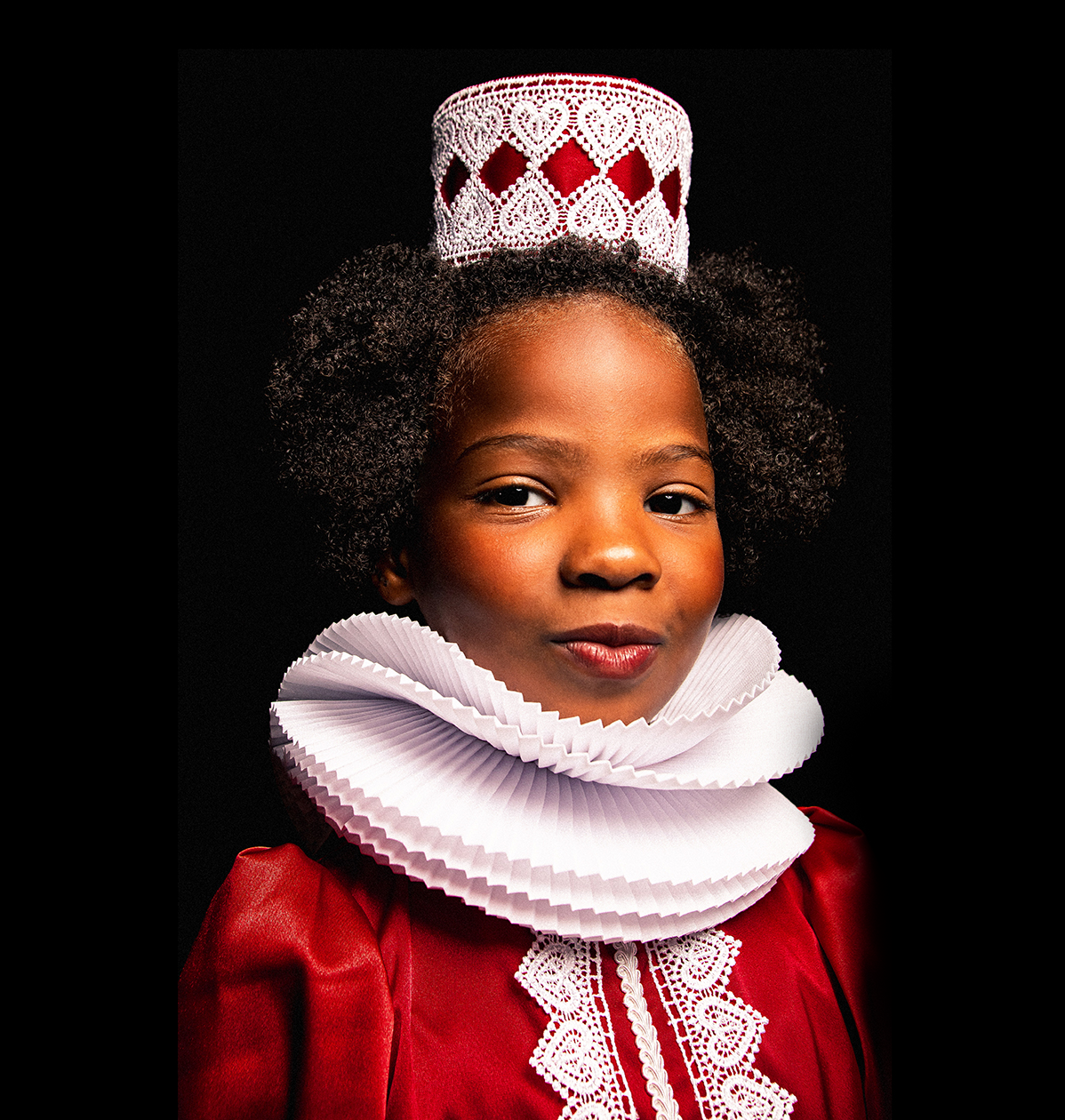
Photograph by Joe Mazza / Brave Lux
Using this Series: Why Mother Goose?
The Countess of Confounding
Mother Goose’s rhymes were my inheritance, passed down through generations from mother to mother, to me, and I shared the gift with my own daughter. Mother Goose is my Lady of Lore, Nurse of Nonsense, Mistress of Mirth, Countess of Confounding, and Regina of Rhyme. I imagine she is yours too. Since her anonymous inception, she has belonged to everyone, and always will. She has been with us in the oral tradition for millennia, and in print without interruption for nearly 300 years. She is universally known, yet we have no fixed image of her; she is our most familiar mystery.
It’s fitting that we reimagine her for every generation. With this project, I am attempting to do just that. This is my contemporary vision of Mother Goose, inspired and informed by history, tradition, and my own imagination.
The Mother of English Letters
Mother Goose is one of the most important literary figures in the history of the English language. The nursery rhymes collected in her name number in the hundreds, and the editions of Mother Goose books in the thousands. Her simple rhymes introduce children to the building blocks of literature: character, scene, action, plot, and to essential poetic devices, such as meter, rhyme, and alliteration.
Nonsense and Handiwork
When John Newbery published Mother Goose’s Melody, in 1765, he became the father of British children’s literature and ensured that her handiwork would be forever seen and heard. Since her first publication, she has been the anonymous, ever-present purveyor of nonsense, a shape-shifting maternal form that has endured through the centuries.
When she was first drawn on paper by artists, she was depicted more often as a hag on a broomstick than as the kindly grandmother figure she has become. It’s possibly no coincidence that as women artists illustrators began to do the drawing, her softer maternal nature was revealed.
Not Without Controversy
In spite of her illustrious place in the English literary pantheon, Mother Goose has not been without controversy. Attempts to censor her began as early as the 19th century and she has all but been abandoned by many parents and teachers today. But should we abandon Mother Goose for her occasional coarseness and cruelty or are there parts of her that can be redeemed and cherished? Should we toss the baby out with the bathwater (a cruel cruel colloquial expression with echoes of “The Old Woman in a Shoe”? Many outmoded and, in some cases, outlawed behaviors and attitudes toward children that we would never find acceptable today appear in traditional rhymes. But these verses are historical artifacts, full of real lessons, if we look and listen.
In Defense of The Mother
There is far more to the Mother Goose canon than children tumbling down hills or being whipped and walloped for their offenses. We need a critical eye to separate the harsh and vulgar from the whimsical and sweet. Considering the scope and scale of the collected verses, it would be an immense loss to children’s literature and to modern childhood to silence Mother Goose when she still has so much to say. She endures because children love her.
Mother Goose as Teacher
Mother Goose is fun, but she is also a wonderful teacher. With Mother Goose, children learn to play with language, to anticipate a rhyme, define and pronounce new words, and commit their first poetry to memory. As they encounter outmoded idioms and historical references, they learn that language and culture are ever changing. There is so much to learn from all this nonsense, but all the learning enters the child’s mind as a parade of merry kings and queens, of butchers and bakers and candlestick makers, running dishes and laughing dogs, magic trees of golden pears, houses made of pumpkin shells, and pretty maids all in a row.
Through teaching these nursery rhymes, we connect children to an enduring oral tradition that has brought delight for generations. Our hope is that you and the children you teach will do your part to make sure that this precious centuries-long chain of words will remain unbroken. Remember, every time a child learns one of her rhymes, Mother Goose lives another day.